
Introduction
Don’t we all love playing with toys? Nowadays, we see toy unboxings on basically every corner of social media. With toys being a booming industry, more and more are being produced each year to meet growing demand. Whether we know it or not, toys cause a large amount of environmental distress. What seems like a small harmless object, comes from a complex manufacturing process, resource extraction and global transportation. All together combined, this greatly affects our environment. Let us see how.
Environmental Impacts
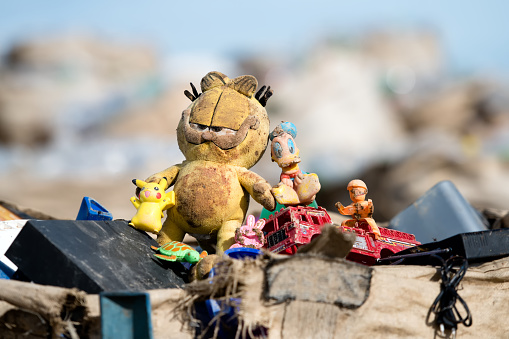
Did you know that each year, 60 million Barbie dolls are sold, contributing emissions equivalent to burning 381 million gallons of gasoline? In France, 40 million toys are discarded into landfills annually, and worldwide, toys make up 6 percent of all landfill plastics. 1 The average child in a developed country like Australia, owns an estimated 200 toys, yet plays with only 12 daily. As children grow, many of these toys are discarded, contributing to the approximately 40 million tons of plastic waste generated each year. And while some toys are donated or passed down, a significant number end up in landfills or the ocean. 2 In landfills, they release harmful chemicals as they slowly break down. In the ocean, they contribute to the growing problem of plastic pollution, with small pieces being ingested by marine life, leading to injury or worse.
The problem arises not only in discarding the toys. The production process for plastic toys involves the extraction and refining of petroleum, which emits large amounts of greenhouse gases. The manufacturing process itself is energy-intensive, further contributing to carbon emissions. Additionally, the sector heavily relies on petroleum-based plastics such as ABS, polyvinylchloride (PVC), and nylon. Add to that the packaging, often plastic-wrapped or boxed in non-recyclable materials, and the environmental toll grows even larger. Additionally, manufacturing new toys takes significant resources and energy. Improper disposal, including incineration, releases harmful fumes and greenhouse gases.
Solutions
If we continue to let the industry stay as it is, irreparable damage will be done to our environment. There are a lot of things we, as a consumer can do to help mitigate the environmental impact.
First and foremost, though it may seem obvious, we must extend the life of toys by repairing and mending them if possible. Simple actions like cleaning, fixing broken parts, or repurposing toys can keep them out of the trash. Additionally, instead of throwing them away when their time is done, they can be donated to charity or exchanged with neighbors and friends.
When purchasing toys, look for options made from sustainable materials like wood, organic cotton, or recycled plastic. These toys are often more durable and can be passed down through generations, further reducing their environmental impact. Brands that prioritise eco-friendly production practices are also worth supporting, as they help shift the industry towards more sustainable models. Another way is to consider using wood toys. Studies have shown that locally produced traditional wooden toys in India are less toxic, consume less energy, and have less environmental impact than the poly-vinyl chloride (PVC) toys made in China.
An age old trick is toy swaps. Rather than buying new toys continuously, store a portion of your childs toys away from them and swap them periodically. This created the illusion of new toys and reduces the need to buy more. There are also many manufacturer take back programs which are not put to good use, so researching them specific to the toys you own is a good step.
By making conscious choices about our toys we reduce demand for virgin plastics (brand-new, high-purity plastic manufactured directly from petrochemical feedstocks (like crude oil or natural gas) that has never been used, processed, or recycled before). We also decrease the volume of waste in our landfills. We also aid in lowering the carbon footprint associated with manufacturing and transporting new toys. We also conserve resources for future generations. Lastly, and perhaps most impotnantly, we teach our children about environmental stewardship. As Franklin D. Roosevelt said, “We cannot always build our future for the young but we can build our young for the future.